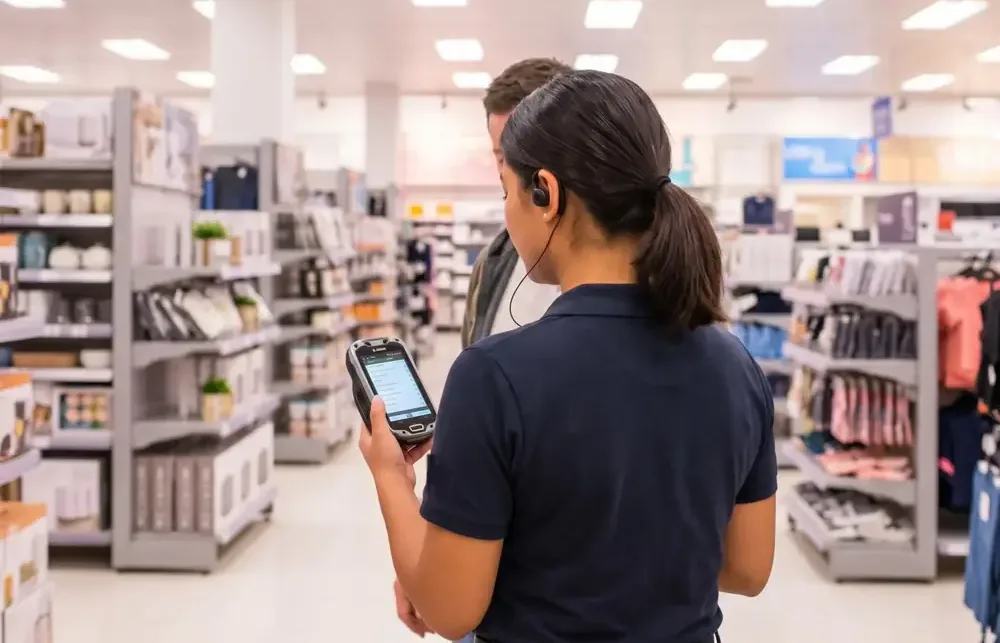
Team Member Assistant for Frontline Operations
“How can we use AI in our stores?”
100+team members and managers using it in the live store, and growing
- Focus
- We set a future-state vision for an AI-enabled store operating model, and mapped the jobs and pains of team members on the shop floor. From these we framed hypothesised solutions and benefit opportunities, then asked what must be true for each to meet reality.
- Design and test
- Exploration and experimentation ran in parallel, with low- and no-code prototypes testing early desirability and need with team members. They converged when we stood up a project team in store, building and refining daily from real shop-floor data. Fabio steered it through IT and AI governance.
- The case
- Evidence from a live store made the case. It is now in production for managers and team members at Kmart, designed for deployment to its 40,000+ store team.
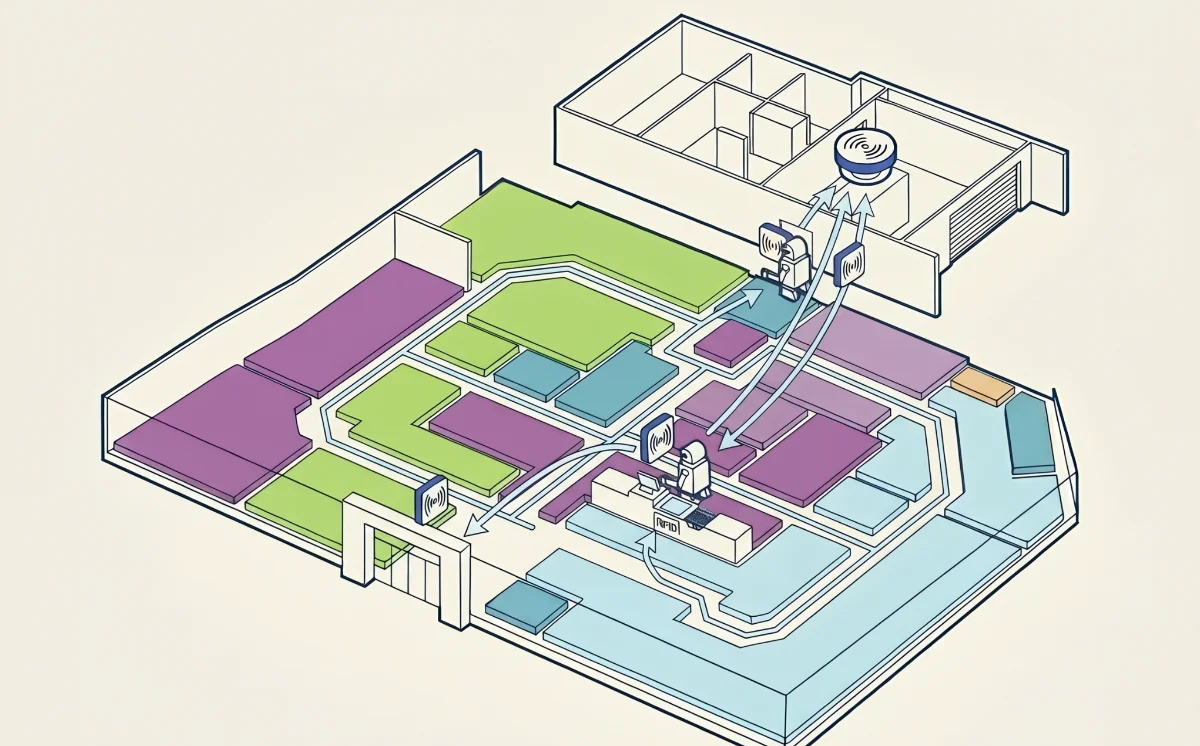
RFID for Retail Store Operations
A stretch goal for stock accuracy, with no proven playbook to follow.
95%inventory accuracy, met in one controlled trial store
- Focus
- Our GM set a stretch goal that meant solving two hard problems at once: locating and counting every product across the entire store, and labelling every current and new product with a single RFID label type.
- Design and test
- We developed product archetypes as the labelling approach, refined over six months of label tests. For location, we combined fixed and worn RFID readers with algorithms that assign each product's position as it moves, so stockrooms no longer need a full scan. Proven in a full-store prototype.
- The case
- The goal was met in the trial store. The work moved to a funded product squad, which took the hardware to tender.
Product Specifications, Redesigned Around AI
More than 1,000 products needed new RFID labelling specs.
Up to2 hourssaved per product, across more than 1,000 products, with 60–70% going straight through
- Focus
- Extending RFID to general merchandise meant re-specifying labelling for more than 1,000 products. The workflow was manual: for each product, someone opened the spec sheet, cross-checked the RFID guide, chose one of 50+ archetypes and briefed product sourcing. That took up to 2 hours per product, across teams.
- Design and test
- We redesigned the workflow around AI. It reads each product's design and labelling spec sheet, classifies it to an archetype, and routes it to product sourcing with the guidance attached, or flags it for manual review.
- The case
- The tool is in use. 60–70% of products now pass straight through with no time from the product team, and specialist judgement is kept for the exceptions.